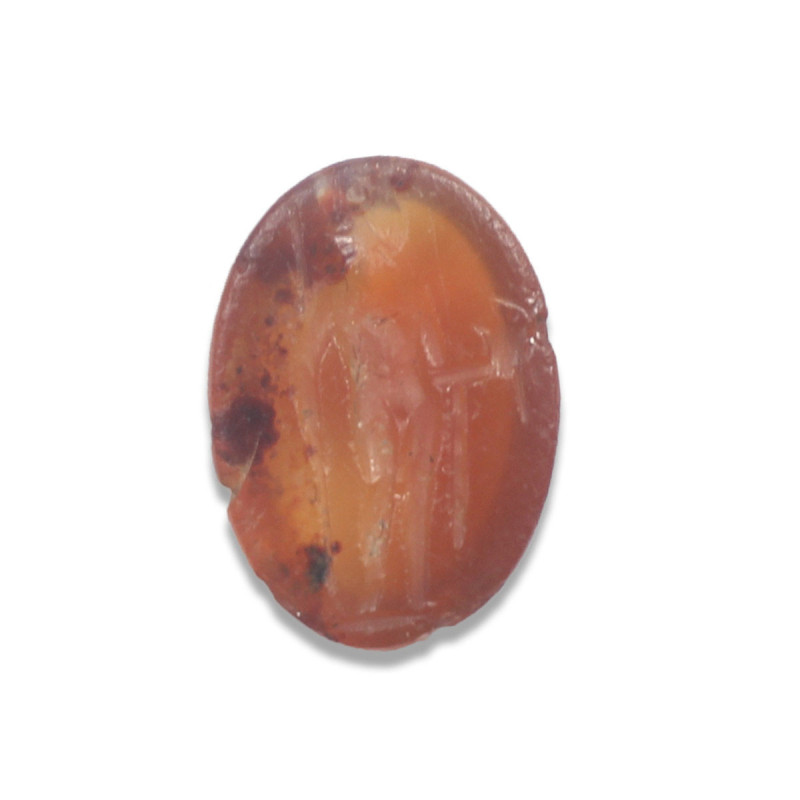
Roman, 2nd - 3rd Century A.D, Gemstone, Carnelian, 10 mm x 7 mm
Specimen observed during Antikarts catalog integration. The record is prepared from the technical and provenance information provided by the source. Photographs are preserved as condition evidence at the time of cataloguing.
Item: Intaglio stone depicting Mars with lance and helmet. Material: Gemstone, Carnelian. Culture: Roman. Period: 2nd - 3rd Century A.D. Dimensions: 10 mm x 7 mm. Condition: Good condition.
Context markers: Roman. Dating indicated: 2nd - 3rd Century A.D.
Reference record preserved for study, comparison and documentation.
Provenance: Ex Austrian private collection, M.S. Collection, acquired before 1970 Mars, ancient Roman deity, in importance second only to Jupiter. Little is known of his original character, and that character (chiefly from the cult at Rome) is variously interpreted. It is clear that by historical times he had developed into a god of war; in Roman literature he was protector of Rome, a nation proud in war.. Record preserved in the Antikarts Museum as a documentary reference. Stored documentary source: https://www.yourantiquarian.com/product/roman-intaglio-stone-depicting-mars-with-lance-and-helmet/.
Archaeological Identity Card
Material, chronological and cultural record for the object