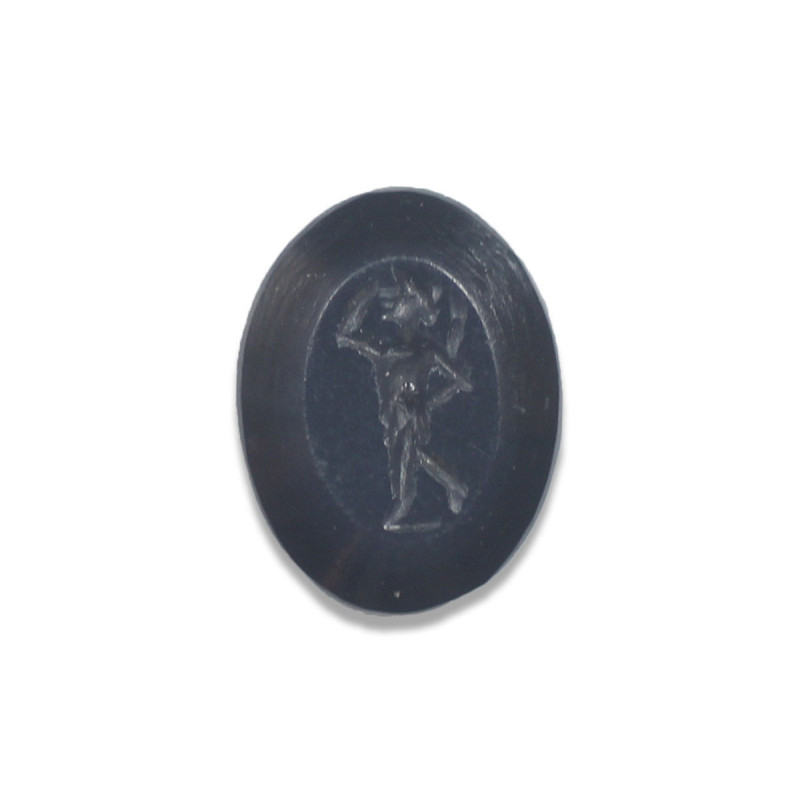
Roman, 2nd - 3rd Century A.D, Gemstone, Opaque glass, 10 mm x 6 mm
Specimen observed during Antikarts catalog integration. The record is prepared from the technical and provenance information provided by the source. Photographs are preserved as condition evidence at the time of cataloguing.
Item: Intaglio stone depicting Satyr with lagobolon. Material: Gemstone, Opaque glass. Culture: Roman. Period: 2nd - 3rd Century A.D. Dimensions: 10 mm x 6 mm. Condition: Good condition.
Context markers: Roman. Dating indicated: 2nd - 3rd Century A.D.
Reference record preserved for study, comparison and documentation.
Provenance: Ex Austrian private collection, M.S. Collection, acquired before 1970 Satyr and Silenus, in Greek mythology, creatures of the wild, part man and part beast, who in Classical times were closely associated with the god Dionysus. Their Italian counterparts were the Fauns (see Faunus). Satyrs and Sileni were at first represented as uncouth men, each with a horse’s tail and ears and an erect phallus. In the Hellenistic age they were represented as men having a goat’s legs and tail.. Record preserved in the Antikarts Museum as a documentary reference. Stored documentary source: https://www.yourantiquarian.com/product/roman-intaglio-stone-depicting-satyr-with-lagobolon/.
Archaeological Identity Card
Material, chronological and cultural record for the object