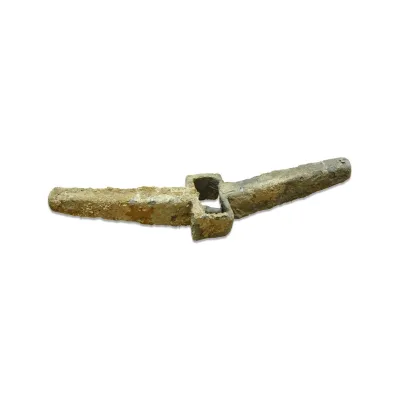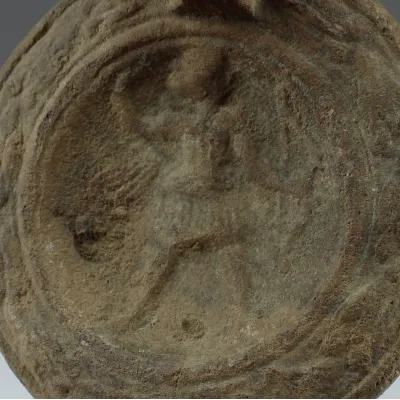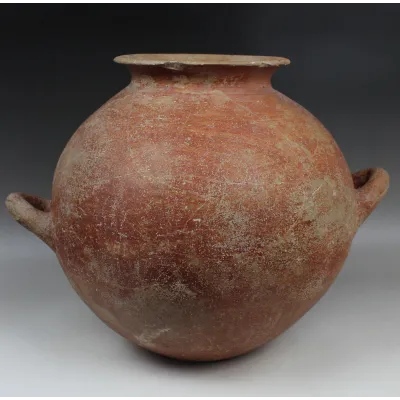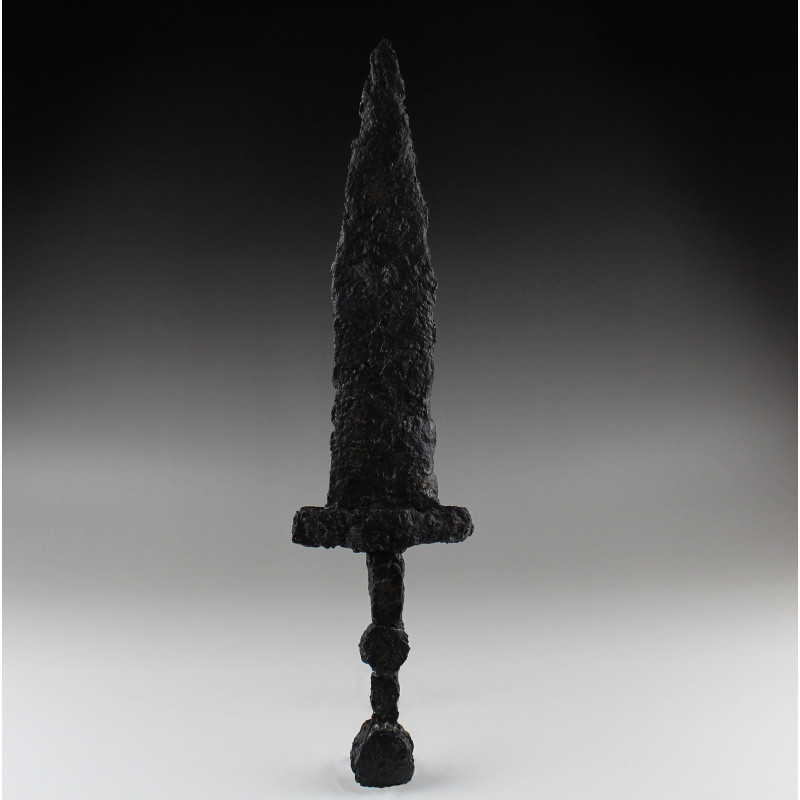
Roman, 1st Century A.D, Iron, 410 mm x 103 mm
Specimen observed during Antikarts catalog integration. The record is prepared from the technical and provenance information provided by the source. Photographs are preserved as condition evidence at the time of cataloguing.
Item: Pugio (dagger). Material: Iron. Culture: Roman. Period: 1st Century A.D. Dimensions: 410 mm x 103 mm. Condition: Good condition. The iron was treated by professional conservators to prevent corrosion..
Context markers: Roman. Dating indicated: 1st Century A.D.
Reference record preserved for study, comparison and documentation.
Provenance: Ex Dutch private collection V. E., Ex Christie's auction house (2010) The pugio was a dagger used by Roman soldiers as a sidearm. It seems likely that the pugio was intended as an auxiliary weapon, but its exact purpose for the soldier remains unknown. Officials of the empire took to wearing ornate daggers in the performance of their offices, and some would wear concealed daggers for defense in contingencies. The dagger was a common weapon of assassination and suicide; for example, the conspirators who stabbed Julius Caesar used pugiones. The pugio developed from the daggers used by the Cantabrians of the Iberian peninsula.. Record preserved in the Antikarts Museum as a documentary reference. Stored documentary source: https://www.yourantiquarian.com/product/roman-pugio/.
Archaeological Identity Card
Material, chronological and cultural record for the object