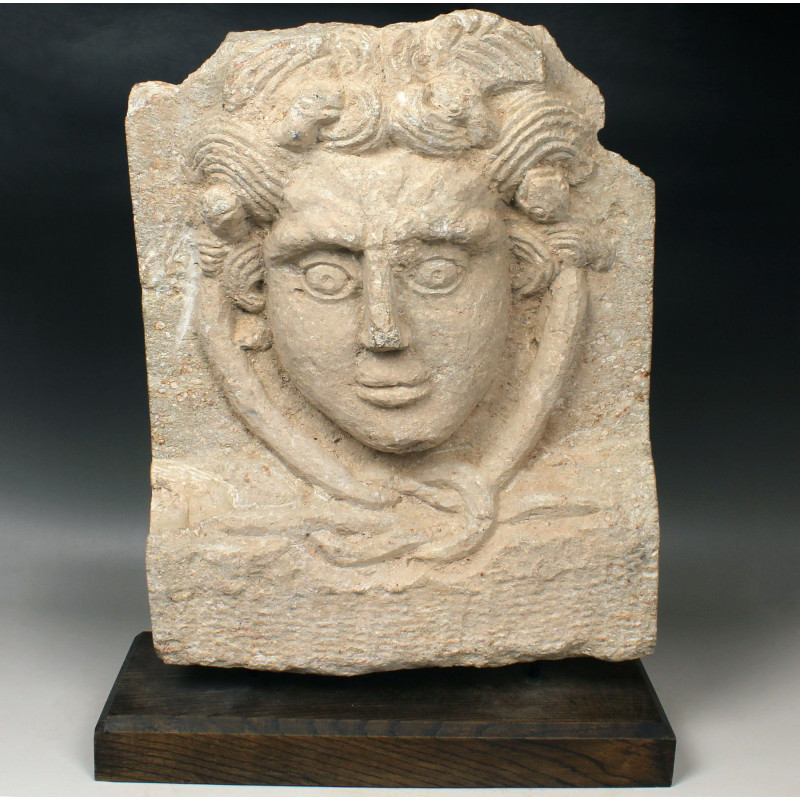
Roman, 2nd - 3rd Century A.D, Limestone, 465 mm x 362 mm x 103 mm (without stand)
Specimen observed during Antikarts catalog integration. The record is prepared from the technical and provenance information provided by the source. Photographs are preserved as condition evidence at the time of cataloguing.
Item: Relief of Medusa and Hercules knot. Material: Limestone. Culture: Roman. Period: 2nd - 3rd Century A.D. Dimensions: 465 mm x 362 mm x 103 mm (without stand). Condition: Good condition. Includes stand.
Context markers: Roman. Dating indicated: 2nd - 3rd Century A.D.
Reference record preserved for study, comparison and documentation.
Provenance: Ex English private collection, P.A., Hertfordshire, specialist collector of Greek Art, acquired between 1980s - 1990s In Roman mythology, Medusa was a Gorgon, a creature with snakes for hair whose gaze could turn anyone to stone. While the Greek mythological tradition portrayed Medusa primarily as a monstrous figure, in Roman art and culture, she often took on a more complex and varied role. The Roman interpretation of Medusa frequently blended elements of her monstrous aspect with her protective qualities, leading to a range of representations in various contexts.. Record preserved in the Antikarts Museum as a documentary reference. Stored documentary source: https://www.yourantiquarian.com/product/roman-relief-of-medusa-and-hercules-knot/.
Archaeological Identity Card
Material, chronological and cultural record for the object