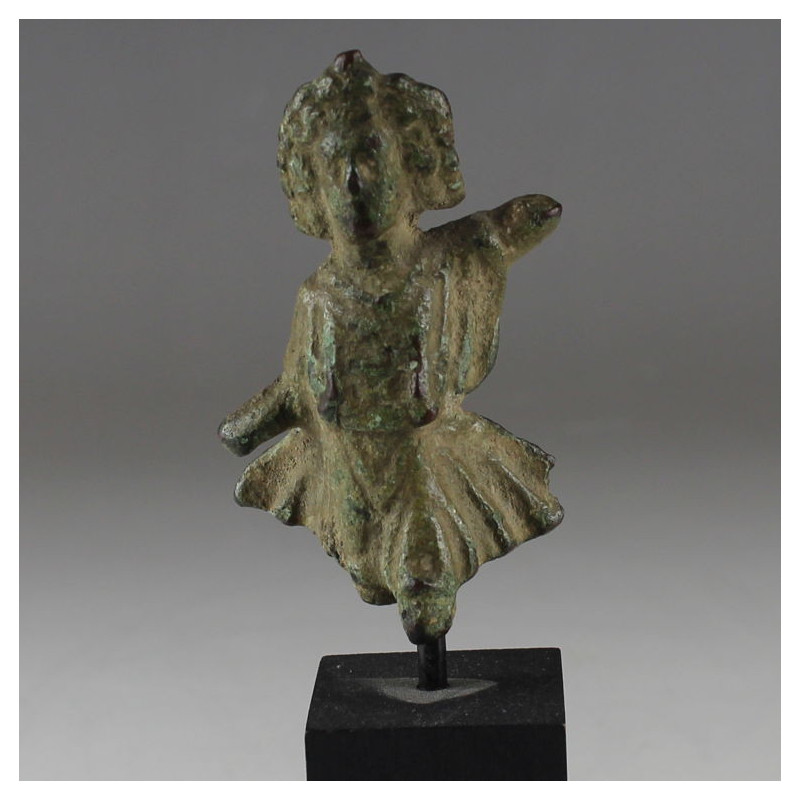
Roman, 2nd - 3rd Century A.D, Bronze, 60 mm x 35 mm (without stand)
Specimen observed during Antikarts catalog integration. The record is prepared from the technical and provenance information provided by the source. Photographs are preserved as condition evidence at the time of cataloguing.
Item: Statuette of a Lar. Material: Bronze. Culture: Roman. Period: 2nd - 3rd Century A.D. Dimensions: 60 mm x 35 mm (without stand). Condition: Good condition. Includes stand.
Context markers: Roman. Dating indicated: 2nd - 3rd Century A.D.
Reference record preserved for study, comparison and documentation.
Provenance: Ex Joseph Klein collection, New York, acquired between 1941 - 1980 The Roman statuette of a Lar represents one of the most common household deities in ancient Roman religion. Lares were protective spirits of the home and family, often associated with ancestors or local spirits of the land. Typically, these statuettes were placed in a family’s lararium, a small household shrine, and were central to daily rituals that invoked protection and prosperity. The figure of a Lar is usually depicted as a youthful male wearing a short tunic, often holding a cornucopia or a drinking horn, symbolizing abundance and well-being.. Record preserved in the Antikarts Museum as a documentary reference. Stored documentary source: https://www.yourantiquarian.com/product/roman-statuette-of-a-lar-2/.
Archaeological Identity Card
Material, chronological and cultural record for the object