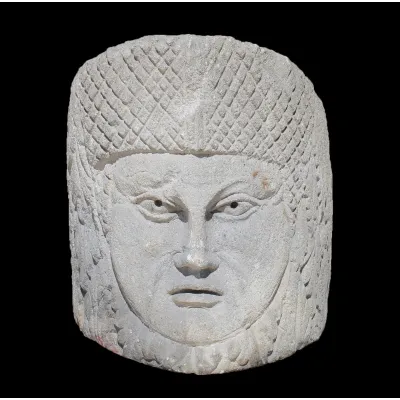
This Greek terracotta head from the 4th century BC represents a remarkable example of Mycenaean figurative art, witnessing the earliest forms of human representation in ancient Greece.
The object constitutes a rare and evocative example of Mycenaean figurative art, modeled with simplicity but expressiveness. It testifies to the crossroads between Cycladic art and continental traditions of the period.
The face presents a stylized visage with features still visible despite its antiquity. The details, although simplified according to the aesthetic conventions of the period, offer a precious glimpse into ancient Greek art.
Not applicable for this archaeological object.
Flan and edge
The terracotta presents a beautiful surface patina characteristic of its age and conservation.
Dimensions: 40 mm x 28 mm. Material: terracotta. Conservation state: good with natural patina.
These terracotta heads were probably elements of votive or funerary statuettes, representing divinities, mythological characters or anonymous figures linked to domestic or religious rites.
The absence of body and stylization of features refer to Mycenaean aesthetic conventions, where emphasis was placed on symbolism rather than realism.
Established provenance: ex English private collection, acquired between 1980 and 1995.
Archaeological Identity Card
Material, chronological and cultural record for the object