Quetta Bowl from the Indus Valley in terracotta
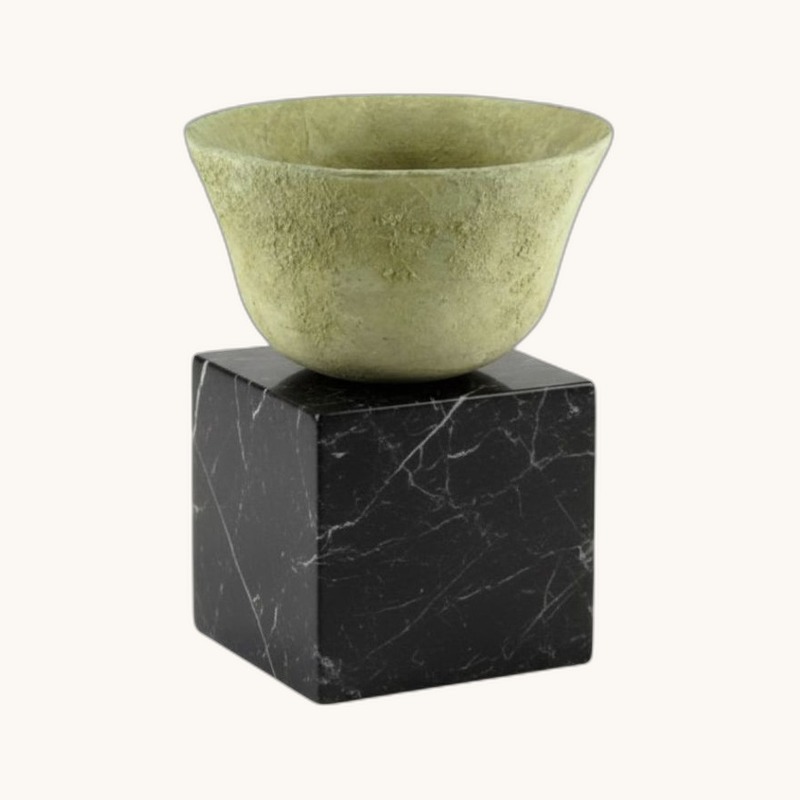
Quetta type bowl dating from the 3rd-2nd millennium BC, from the Indus Valley Civilization. This archaeological piece represents the technical excellence of proto-urban workshops in Balochistan.
Typology: buff ware bowl with low truncated conical profile and everted rim. Attribution to the Quetta/Damb Sadaat group is confirmed by morphology, light paste and oxidizing firing. Museum parallels at the Metropolitan Museum and Penn Museum attest to its scientific legitimacy.
Not applicable - archaeological object.
Not applicable - archaeological object.
Flan and edge
Truncated cone body with gentle elevation, slightly everted rim opening the volume, thinned walls with perfect continuity. Rounded base finished by turning/smoothing.
Height: 6.5 cm, Diameter: 10 cm. Fine buff terracotta with beige-sand patina animated by calcareous veils. Structural decoration with finishing striations, quality internal smoothing. Ancient tension line testifying to authenticity.
In the Indus Valley, proto-urban development was accompanied by refined ceramology. Balochistan workshops favored profile accuracy where utility carried ritual value, embodying an aesthetic of simplicity.
This bowl embodies the harmony between useful gesture and ritual meaning. Through the purity of profile and accuracy of shaping, it represents a reference piece for proto-urban arts of Western Asia.
Provenance: old British private collection (before 1970), then A.A. Gallery (UK). Certificate of authenticity provided. Sale under expert control with secure shipping.
Archaeological Identity Card
Material, chronological and cultural record for the object