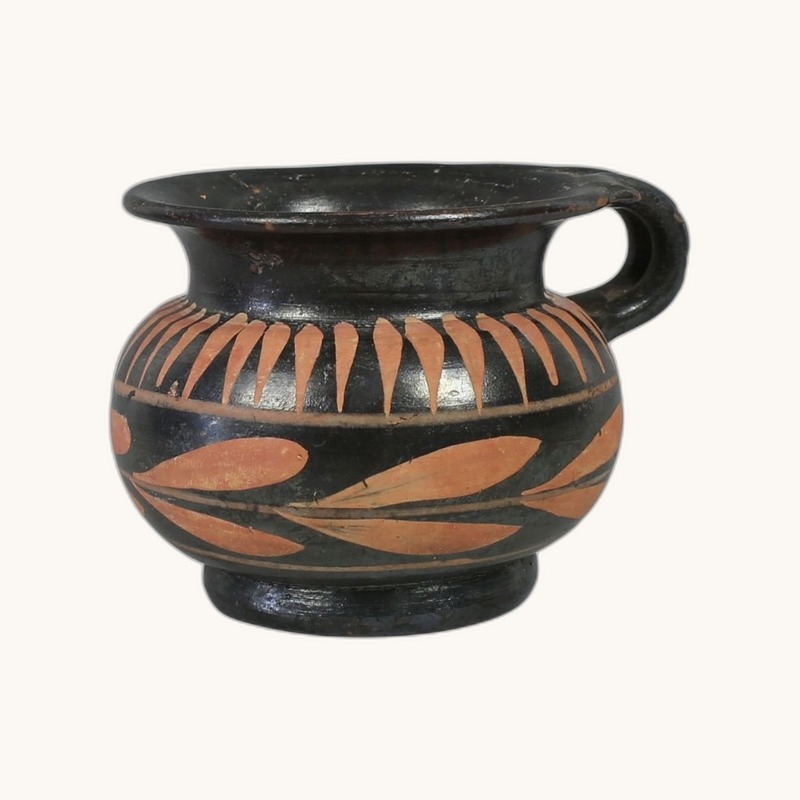
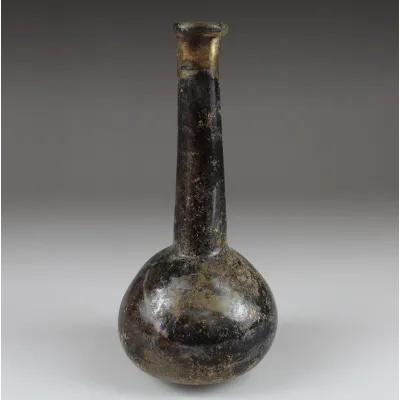
This miniature Greek olpe in ceramic constitutes a remarkable example of Apulian production from the 4th century BC, belonging to the Xenon ware category.
Careful observation under magnification and raking light reveals production characteristic of Apulian workshops. The vase is distinguished by its perfectly identifiable typology and careful finish.
Not applicable for this ceramic object.
Not applicable for this ceramic object.
Flan and edge
Continuous profile without marked break between body and neck, regular rim receiving the attachment of the single vertical handle.
Dimensions: 65 × 92 mm. Well-fired light clay covered with regularly applied black slip. Mastered turning and firing technique. Vertical handle rising above the rim.
In the 4th century BC, the workshops of Magna Graecia developed refined ceramic productions. Xenon ceramics are distinguished by their refined aesthetics. Olpai were used to pour wine or water during banquets.
Representative testimony of Greek ceramics from Southern Italy, illustrating the alliance between functionality and formal research. Piece suitable for a specialized collection or museum presentation.
Documented provenance from a Dutch private collection assembled between 1970 and 2000. Delivered with certificate of authenticity.
Archaeological Identity Card
Material, chronological and cultural record for the object