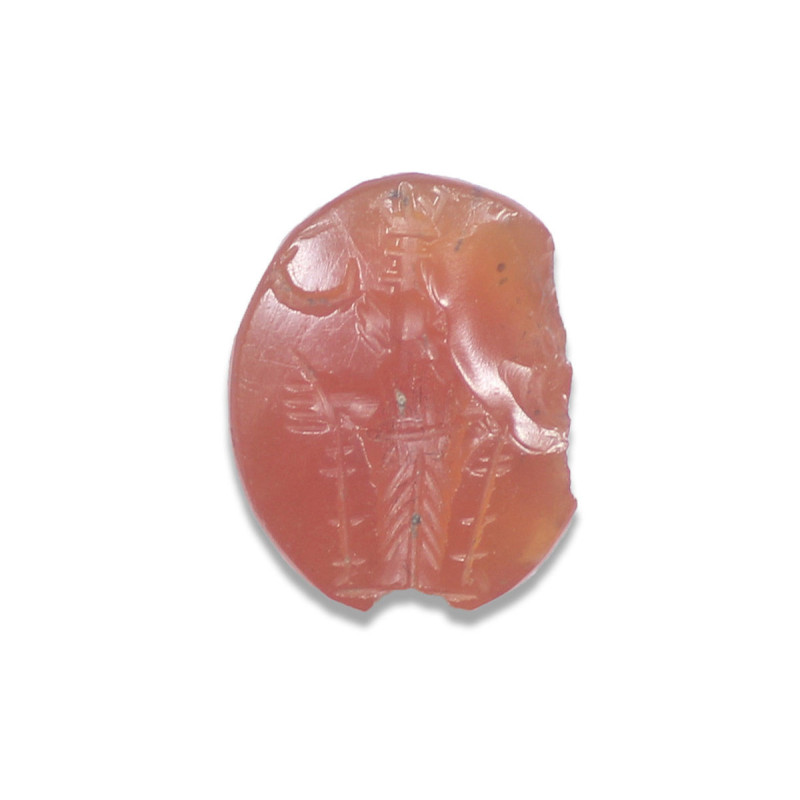
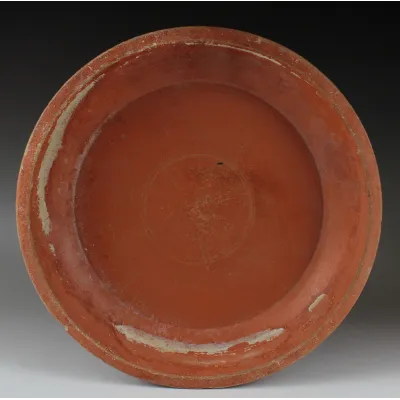
Romain, 2e - 3e siècle ap. J.-C., gemstone, carnelian, 10 mm x 8 mm
Exemplaire observé lors de l’intégration au cabinet Antikarts. L’objet est présenté à partir des informations techniques et de provenance communiquées par la source. La photographie est conservée comme preuve d’état au moment du catalogage.
Objet : Intaglio stone depicting Diana of Ephesus. Matériau : Gemstone, Carnelian. Culture : Romain. Période : 2e - 3e siècle ap. J.-C.. Dimensions : 10 mm x 8 mm. État : Good condition.
Repères de contexte : Romain. Datation indiquée : 2e - 3e siècle ap. J.-C..
Notice de référence conservée pour étude, comparaison et documentation.
Provenance : Ex Austrian private collection, M.S. Collection, acquired before 1970 Diana (among the Romans) or Artemis (among the Greeks) was the Goddess of the Moon and of the hunt. She was the virgin protectress of woodlands and wild animals, and is often depicted with a bow and arrows, which were used to punish mortals who angered her. She was the twin sister of Apollo, and the daughter of Jupiter (Zeus) and Latona (Leto).. Fiche conservée au Musée Antikarts comme référence documentaire. Source documentaire conservée : https://www.yourantiquarian.com/product/roman-intaglio-stone-depicting-diana-of-ephesus/.
Fiche d'identité archéologique
Notice matérielle, chronologique et culturelle de l'objet