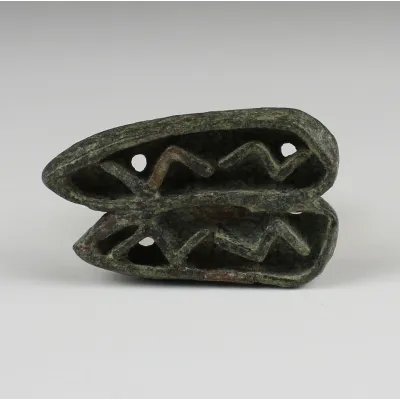
Romain, 2e - 3e siècle ap. J.-C., gemstone, carnelian, 12 mm x 10 mm
Exemplaire observé lors de l’intégration au cabinet Antikarts. L’objet est présenté à partir des informations techniques et de provenance communiquées par la source. La photographie est conservée comme preuve d’état au moment du catalogage.
Objet : Intaglio stone depicting Fortuna with cornucopia and palm branch. Matériau : Gemstone, Carnelian. Culture : Romain. Période : 2e - 3e siècle ap. J.-C.. Dimensions : 12 mm x 10 mm. État : Good condition.
Repères de contexte : Romain. Datation indiquée : 2e - 3e siècle ap. J.-C..
Notice de référence conservée pour étude, comparaison et documentation.
Provenance : Ex Austrian private collection, M.S. Collection, acquired before 1970 Fortuna, in Roman religion, goddess of chance or lot who became identified with the Greek Tyche; the original Italian deity was probably regarded as the bearer of prosperity and increase. As such she resembles a fertility deity, hence her association with the bounty of the soil and the fruitfulness of women. Frequently she was an oracular goddess consulted in various ways regarding the future. Fortuna was worshiped extensively in Italy from the earliest times. At Praeneste her shrine was a well-known oracular seat, as was her shrine at Antium. Fortuna is often represented bearing a cornucopia as the giver of abundance and a rudder as controller of destinies, or standing on a ball to indicate the uncertainty of fortune.. Fiche conservée au Musée Antikarts comme référence documentaire. Source documentaire conservée : https://www.yourantiquarian.com/product/roman-intaglio-stone-depicting-fortuna/.
Fiche d'identité archéologique
Notice matérielle, chronologique et culturelle de l'objet