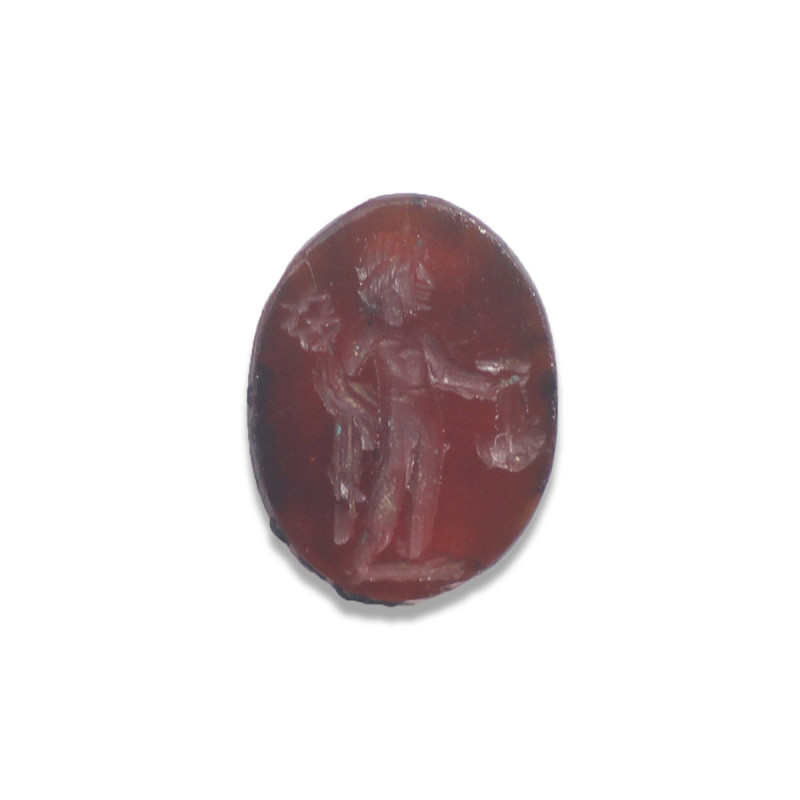
Romain, 2e - 3e siècle ap. J.-C., gemstone, carnelian, 10 mm x 7 mm
Exemplaire observé lors de l’intégration au cabinet Antikarts. L’objet est présenté à partir des informations techniques et de provenance communiquées par la source. La photographie est conservée comme preuve d’état au moment du catalogage.
Objet : Intaglio stone depicting Mercury with caduceus and purse. Matériau : Gemstone, Carnelian. Culture : Romain. Période : 2e - 3e siècle ap. J.-C.. Dimensions : 10 mm x 7 mm. État : Good condition.
Repères de contexte : Romain. Datation indiquée : 2e - 3e siècle ap. J.-C..
Notice de référence conservée pour étude, comparaison et documentation.
Provenance : Ex Austrian private collection, M.S. Collection, acquired before 1970 Mercury, Latin Mercurius, in Roman religion, god of shopkeepers and merchants, travelers and transporters of goods, and thieves and tricksters. He is commonly identified with the Greek Hermes, the fleet-footed messenger of the gods.. Fiche conservée au Musée Antikarts comme référence documentaire. Source documentaire conservée : https://www.yourantiquarian.com/product/roman-intaglio-stone-depicting-mercury-with-caduceus-and-purse/.
Fiche d'identité archéologique
Notice matérielle, chronologique et culturelle de l'objet