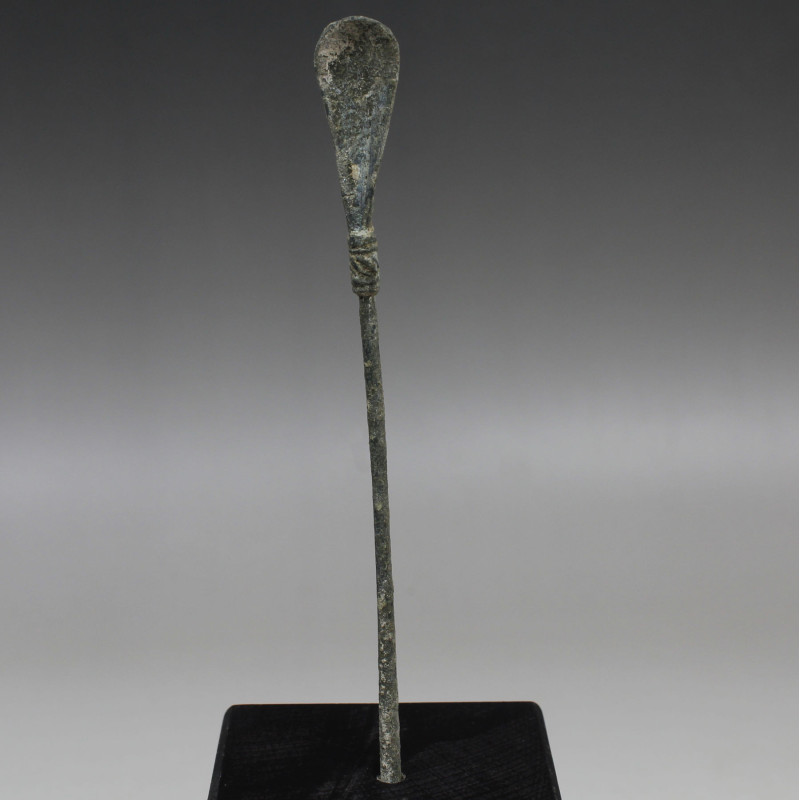
Romain, 1e - 3e siècle ap. J.-C., bronze, 131 mm x 14 mm
Exemplaire observé lors de l’intégration au cabinet Antikarts. L’objet est présenté à partir des informations techniques et de provenance communiquées par la source. La photographie est conservée comme preuve d’état au moment du catalogage.
Objet : Medical instrument, probe. Matériau : Bronze. Culture : Romain. Période : 1e - 3e siècle ap. J.-C.. Dimensions : 131 mm x 14 mm. État : Good condition.
Repères de contexte : Romain. Datation indiquée : 1e - 3e siècle ap. J.-C..
Notice de référence conservée pour étude, comparaison et documentation.
Provenance : Ex Polish private collection, E., Ex Germany private collection acquired before 2003 Roman bronze medical instruments, meticulously fashioned with skill and care, epitomize the sophistication of ancient healthcare. These robust implements, encompassing scalpels, forceps, and probes, manifest the Romans' dedication to surgical precision and patient well-being. These tools played pivotal roles in an array of medical procedures, from intricate surgeries to wound management, underscoring the Romans' unwavering commitment to the practice and science of healing. In contemporary times, these relics remain enduring symbols of the enduring influence of Roman medicine and surgical prowess.. Fiche conservée au Musée Antikarts comme référence documentaire. Source documentaire conservée : https://www.yourantiquarian.com/product/roman-medical-instrument-probe/.
Fiche d'identité archéologique
Notice matérielle, chronologique et culturelle de l'objet