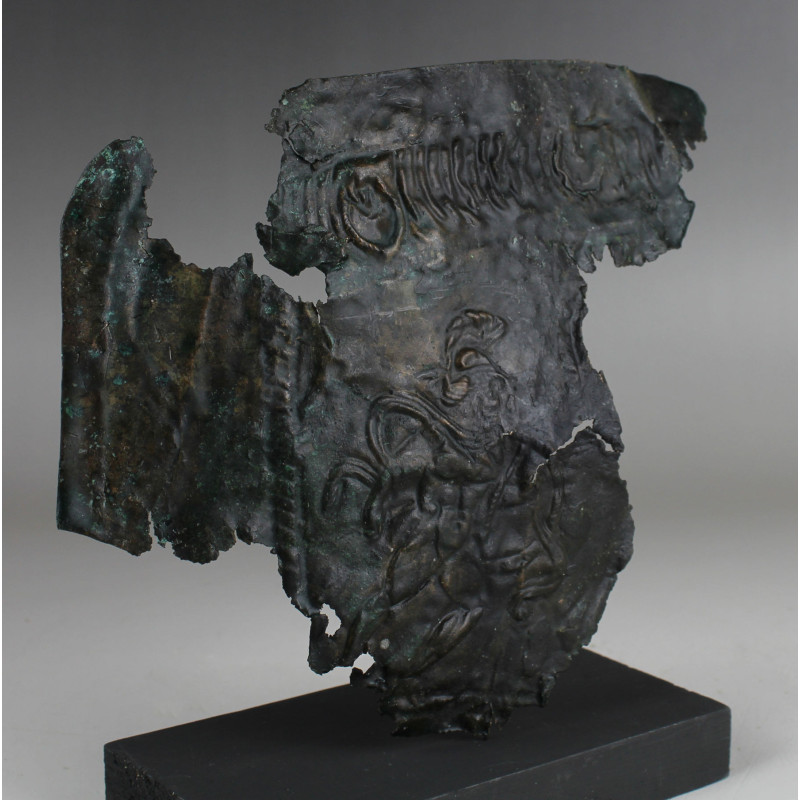
Romain, 3e siècle ap. J.-C., bronze, 155 mm x 180 mm
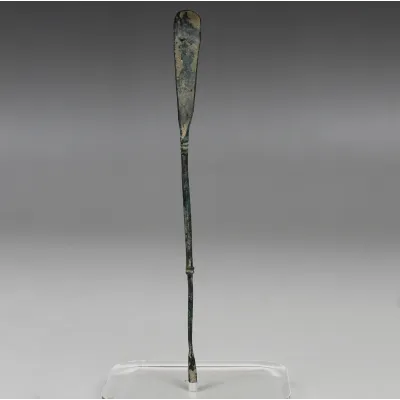
Exemplaire observé lors de l’intégration au cabinet Antikarts. L’objet est présenté à partir des informations techniques et de provenance communiquées par la source. La photographie est conservée comme preuve d’état au moment du catalogage.
Objet : Military mask helmet section depicting Mars. Matériau : Bronze. Culture : Romain. Période : 3e siècle ap. J.-C.. Dimensions : 155 mm x 180 mm. État : Good condition. Includes a certificate of search in the stolen works of art of Interpol database.
Repères de contexte : Romain. Datation indiquée : 3e siècle ap. J.-C..
Notice de référence conservée pour étude, comparaison et documentation.
Provenance : Ex Alison Barker private collection, a retired London barrister, acquired between 1960s - 1990s Roman military equipment is famous for its abundance of depictions rife with symbolical content. The so-called cavalry sports equipment, which used to be seen as being solely parade armour, can be distinguished from the infantry equipment not only by its function, but also by its design. There are numerous surviving heavily ornamented parts of Roman cavalry equipment and a number of studies have been published on their purpose and decoration. Whether the ornamented equipment belonged to parade armour or was also worn in battle is still under discussion. One of those groups contains the helmets, of which a relatively large number of different variations exist. Apart from the calotte with its neck guard, the loosely attached cheek pieces were also an essential part of the helmet. Cheek pieces as protective elements were used both for infantry and cavalry helmets. Although in some cases it is still difficult to attribute individual examples to the cavalry, due to the higher amount of remains we can be relatively certain that the majority of helmets did indeed belong to the cavalry.. Fiche conservée au Musée Antikarts comme référence documentaire. Source documentaire conservée : https://www.yourantiquarian.com/product/roman-military-mask-helmet-section-depicting-mars/.
Fiche d'identité archéologique
Notice matérielle, chronologique et culturelle de l'objet