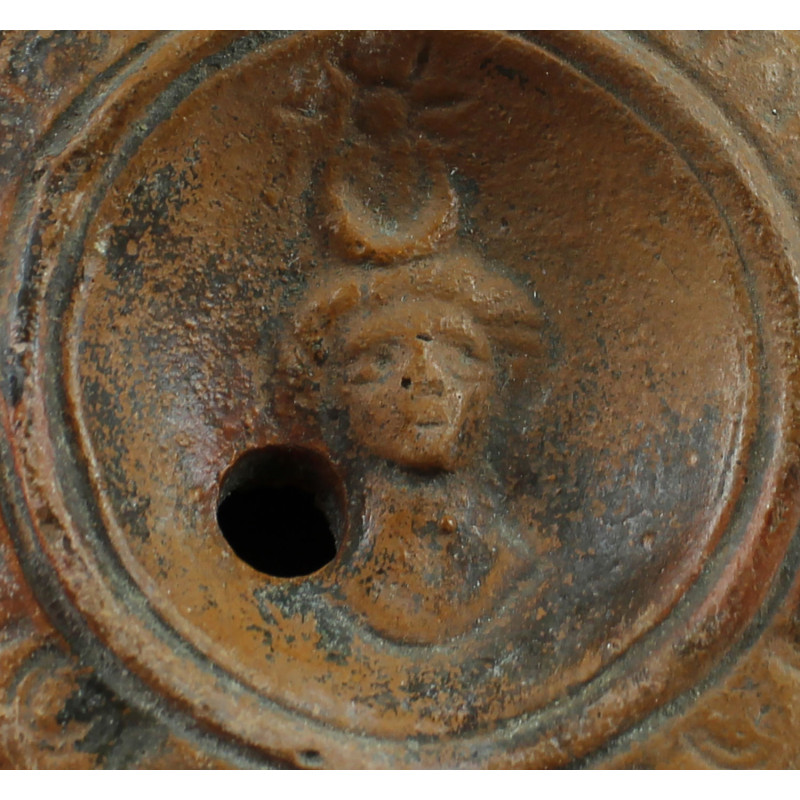
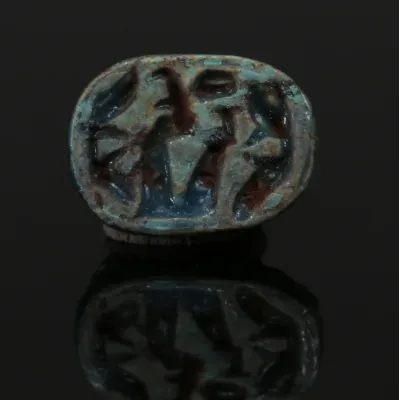
Romain, 1e - 3e siècle ap. J.-C., terracotta, 40 mm x 65 mm x 98 mm
Exemplaire observé lors de l’intégration au cabinet Antikarts. L’objet est présenté à partir des informations techniques et de provenance communiquées par la source. La photographie est conservée comme preuve d’état au moment du catalogage.
Objet : Oil lamp with Luna (Selene) with two horns in crescent form. Matériau : Terracotta. Culture : Romain. Période : 1e - 3e siècle ap. J.-C.. Dimensions : 40 mm x 65 mm x 98 mm. État : Good condition.
Repères de contexte : Romain. Datation indiquée : 1e - 3e siècle ap. J.-C..
Notice de référence conservée pour étude, comparaison et documentation.
Provenance : Ex German private collection, K.S., Bayern, acquired between 1970 - 2005 In ancient Roman religion and myth, Luna is the divine embodiment of the Moon (Latin luna; cf. English "lunar"). She is often presented as the female complement of the Sun, Sol, conceived of as a god. Luna is also sometimes represented as an aspect of the Roman triple goddess (diva triformis), along with Proserpina and Hecate. Luna is not always a distinct goddess, but sometimes rather an epithet that specializes a goddess, since both Diana and Juno are identified as moon goddesses.. Fiche conservée au Musée Antikarts comme référence documentaire. Source documentaire conservée : https://www.yourantiquarian.com/product/roman-oil-lamp-with-luna/.
Fiche d'identité archéologique
Notice matérielle, chronologique et culturelle de l'objet