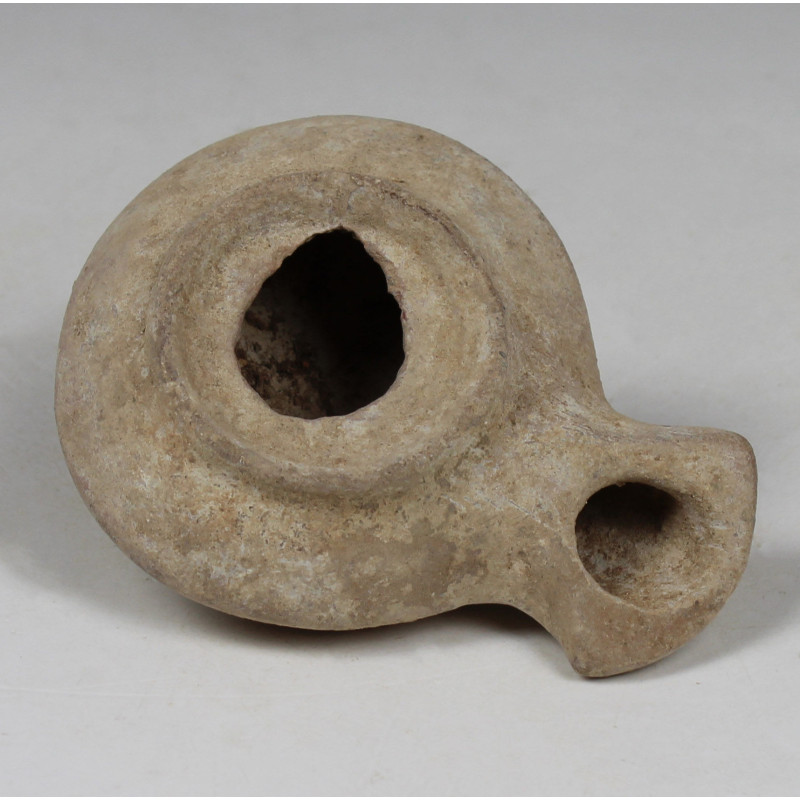
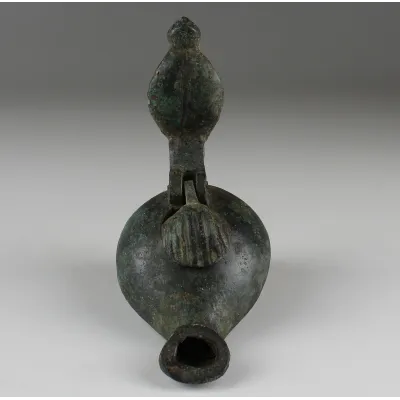
Roman, Judaea, Ier siècle av. J.-C. - 2e siècle ap. J.-C., terracotta, 25 mm x 62 mm x 82 mm
Exemplaire observé lors de l’intégration au cabinet Antikarts. L’objet est présenté à partir des informations techniques et de provenance communiquées par la source. La photographie est conservée comme preuve d’état au moment du catalogage.
Objet : Oil lamp, Type 'Herodian', Kennedy 3, Hadad 4. Matériau : Terracotta. Culture : Roman, Judaea. Période : Ier siècle av. J.-C. - 2e siècle ap. J.-C.. Dimensions : 25 mm x 62 mm x 82 mm. État : Good condition.
Repères de contexte : Roman, Judaea. Datation indiquée : Ier siècle av. J.-C. - 2e siècle ap. J.-C..
Notice de référence conservée pour étude, comparaison et documentation.
Provenance : Ex Jerusalem private collection, acquired between 1975 – 1990. Oil lamps used during the time of Herod, which falls within the period of the Second Temple in ancient Judea, approximately between 37 BCE and 4 BCE, represent a significant aspect of archaeology and material culture of the region during that era. These lamps, also known as "Herodian lamps," were common objects in households and places of worship of the time.. Fiche conservée au Musée Antikarts comme référence documentaire. Source documentaire conservée : https://www.yourantiquarian.com/product/roman-oil-lamp-type-herodian-kennedy-3-hadad-4/.
Fiche d'identité archéologique
Notice matérielle, chronologique et culturelle de l'objet