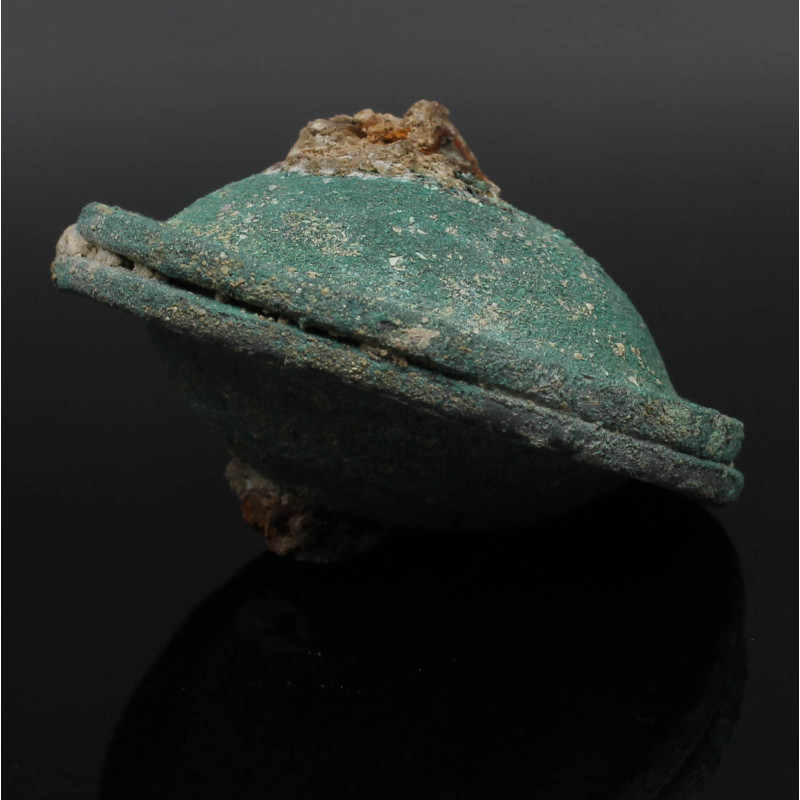
Romain, 1e - 3e siècle ap. J.-C., bronze, 40 mm x 60 mm diameter
Exemplaire observé lors de l’intégration au cabinet Antikarts. L’objet est présenté à partir des informations techniques et de provenance communiquées par la source. La photographie est conservée comme preuve d’état au moment du catalogage.
Objet : Pair of cymbals. Matériau : Bronze. Culture : Romain. Période : 1e - 3e siècle ap. J.-C.. Dimensions : 40 mm x 60 mm diameter. État : Good condition.
Repères de contexte : Romain. Datation indiquée : 1e - 3e siècle ap. J.-C..
Notice de référence conservée pour étude, comparaison et documentation.
Provenance : Ex Jerusalem private collection, A.K., with Israeli export licence number 57470 The Roman cymbal, crafted from bronze, played a significant role in the musical and religious practices of ancient Rome. These percussion instruments were crucial components of Roman music, adding rhythm and texture to various musical compositions and performances. Cymbals consisted of two circular plates made of bronze alloyed with tin, which were struck together or against other surfaces to produce a sharp, metallic sound. The size and thickness of the cymbals varied, allowing for a range of tones and timbres to be produced.. Fiche conservée au Musée Antikarts comme référence documentaire. Source documentaire conservée : https://www.yourantiquarian.com/product/roman-pair-of-cymbals/.
Fiche d'identité archéologique
Notice matérielle, chronologique et culturelle de l'objet