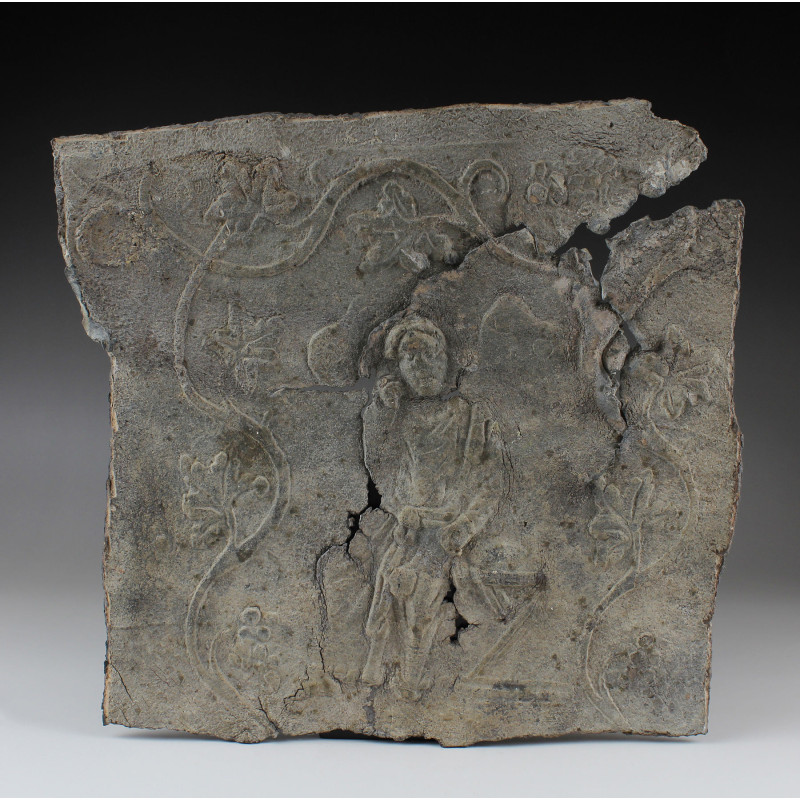
Roman, Southern Lebanon, 2e - 3e siècle ap. J.-C., lead, 235 mm x 240 mm
Exemplaire observé lors de l’intégration au cabinet Antikarts. L’objet est présenté à partir des informations techniques et de provenance communiquées par la source. La photographie est conservée comme preuve d’état au moment du catalogage.
Objet : Sarcophagus panel with character surrounded by floral decoration. Matériau : Lead. Culture : Roman, Southern Lebanon. Période : 2e - 3e siècle ap. J.-C.. Dimensions : 235 mm x 240 mm. État : Good condition.
Repères de contexte : Roman, Southern Lebanon. Datation indiquée : 2e - 3e siècle ap. J.-C..
Notice de référence conservée pour étude, comparaison et documentation.
Provenance : Ex French private collection, acquired between 1970's - 1990's Prior to the 2nd century, Romans cremated their dead; around that time, they became inspired by the Greek and Etruscan practice of using sarcophagi, and they began to make coffins. This trend spread rapidly throughout the Roman Empire and between social stratums. While those of nobility would commission marble sarcophagi, the middle class would commission lead sarcophagi, such as this one. Lead sarcophagi were only made in Phoenicia, or the Eastern part of the empire, but were shipped west due to popularity.. Fiche conservée au Musée Antikarts comme référence documentaire. Source documentaire conservée : https://www.yourantiquarian.com/product/roman-sarcophagus-panel/.
Fiche d'identité archéologique
Notice matérielle, chronologique et culturelle de l'objet