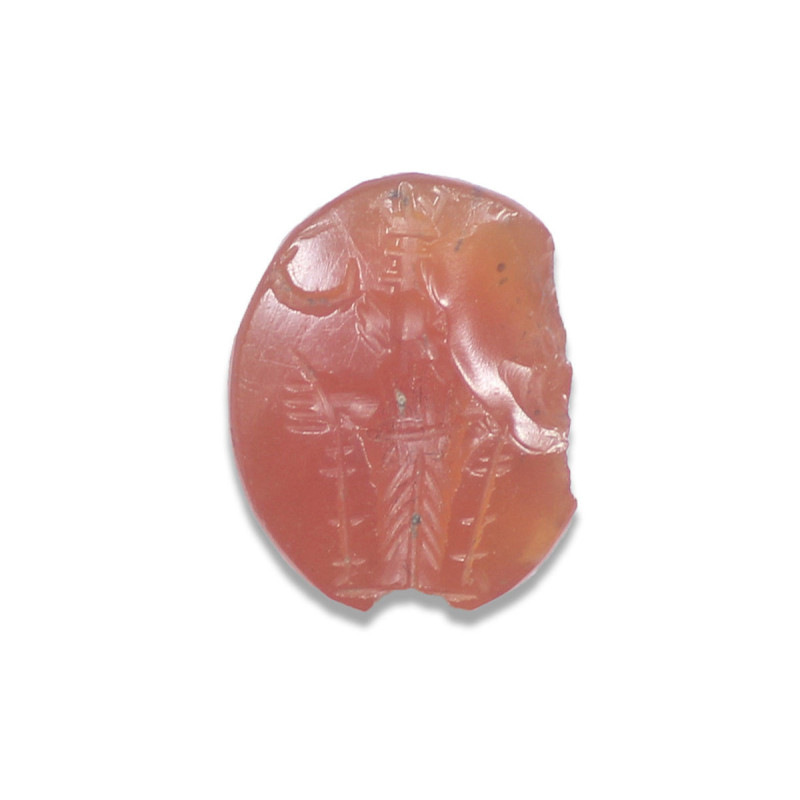
Roman, 2nd - 3rd Century A.D, Gemstone, Carnelian, 10 mm x 8 mm
Specimen observed during Antikarts catalog integration. The record is prepared from the technical and provenance information provided by the source. Photographs are preserved as condition evidence at the time of cataloguing.
Item: Intaglio stone depicting Diana of Ephesus. Material: Gemstone, Carnelian. Culture: Roman. Period: 2nd - 3rd Century A.D. Dimensions: 10 mm x 8 mm. Condition: Good condition.
Context markers: Roman. Dating indicated: 2nd - 3rd Century A.D.
Reference record preserved for study, comparison and documentation.
Provenance: Ex Austrian private collection, M.S. Collection, acquired before 1970 Diana (among the Romans) or Artemis (among the Greeks) was the Goddess of the Moon and of the hunt. She was the virgin protectress of woodlands and wild animals, and is often depicted with a bow and arrows, which were used to punish mortals who angered her. She was the twin sister of Apollo, and the daughter of Jupiter (Zeus) and Latona (Leto).. Record preserved in the Antikarts Museum as a documentary reference. Stored documentary source: https://www.yourantiquarian.com/product/roman-intaglio-stone-depicting-diana-of-ephesus/.
Archaeological Identity Card
Material, chronological and cultural record for the object