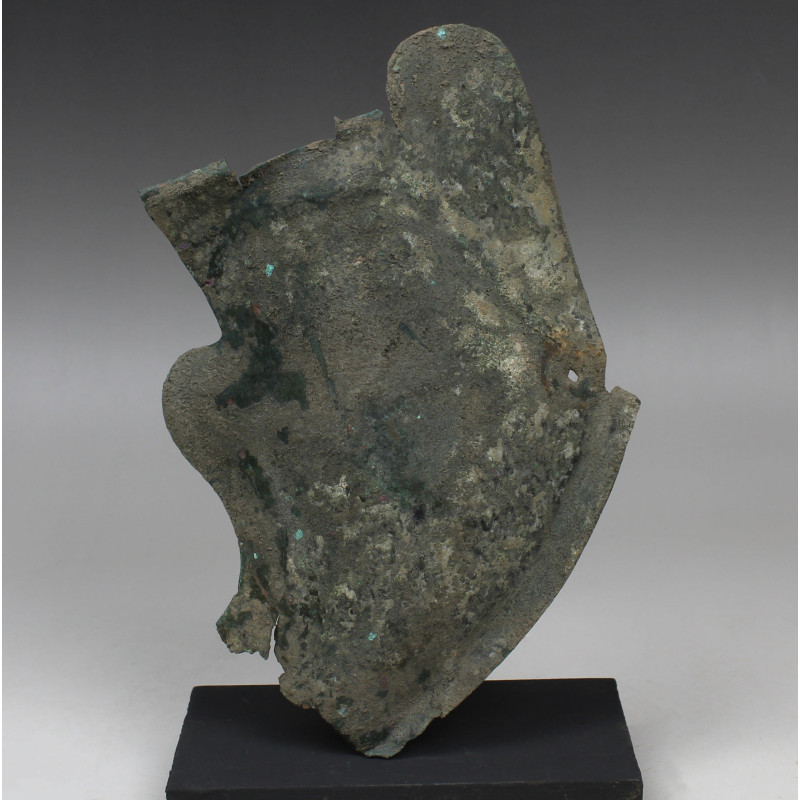
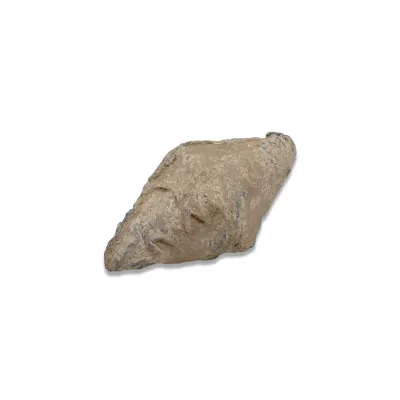
Roman, 2nd - 3rd Century A.D, Bronze, 190 mm x 140 mm x 18 mm
Specimen observed during Antikarts catalog integration. The record is prepared from the technical and provenance information provided by the source. Photographs are preserved as condition evidence at the time of cataloguing.
Item: Military cheek piece of a helmet fragment. Material: Bronze. Culture: Roman. Period: 2nd - 3rd Century A.D. Dimensions: 190 mm x 140 mm x 18 mm. Condition: Good condition.
Context markers: Roman. Dating indicated: 2nd - 3rd Century A.D.
Reference record preserved for study, comparison and documentation.
Provenance: Ex Belgian private collection, acquired between 1960s – 1980s Roman military cheek pieces were integral components of Roman helmets, designed to provide protection to the wearer's face while also contributing to the overall functionality and aesthetics of the helmet. Typically made of metal, these cheek pieces were attached to the sides of the helmet, covering the cheeks and sometimes extending down to protect the neck. The primary purpose of these cheek pieces was to offer added defense to the vulnerable areas of the face during combat, effectively enhancing the protective capabilities of the helmet.. Record preserved in the Antikarts Museum as a documentary reference. Stored documentary source: https://www.yourantiquarian.com/product/roman-military-cheek-piece-of-a-helmet-fragment/.
Archaeological Identity Card
Material, chronological and cultural record for the object