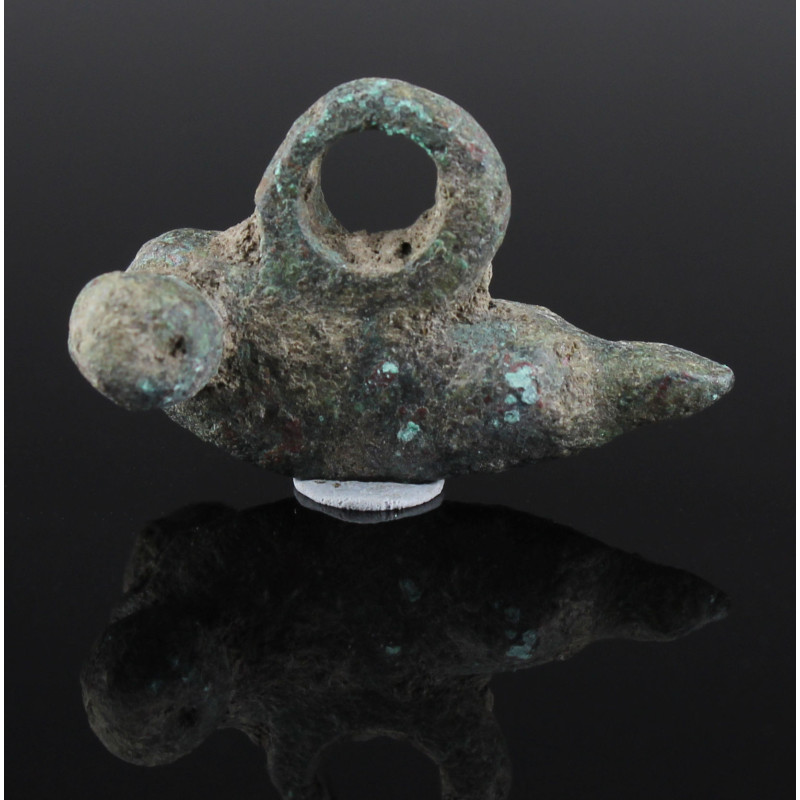
Roman, 1st - 3rd Century A.D, Bronze, 21 mm x 30 mm
Specimen observed during Antikarts catalog integration. The record is prepared from the technical and provenance information provided by the source. Photographs are preserved as condition evidence at the time of cataloguing.
Item: Phallic amulet. Material: Bronze. Culture: Roman. Period: 1st - 3rd Century A.D. Dimensions: 21 mm x 30 mm. Condition: Good condition.
Context markers: Roman. Dating indicated: 1st - 3rd Century A.D.
Reference record preserved for study, comparison and documentation.
Provenance: Ex Belgian private collection, acquired between 1970 – 1980 In ancient Roman religion and magic, the fascinus or fascinum was the embodiment of the divine phallus. The word can refer to the deity himself (Fascinus), to phallus effigies and amulets, and to the spells used to invoke his divine protection. Pliny calls it a medicus invidiae, a "doctor" or remedy for envy (invidia, a "looking upon") or the evil eye.. Record preserved in the Antikarts Museum as a documentary reference. Stored documentary source: https://www.yourantiquarian.com/product/roman-phallic-amulet-5/.
Archaeological Identity Card
Material, chronological and cultural record for the object