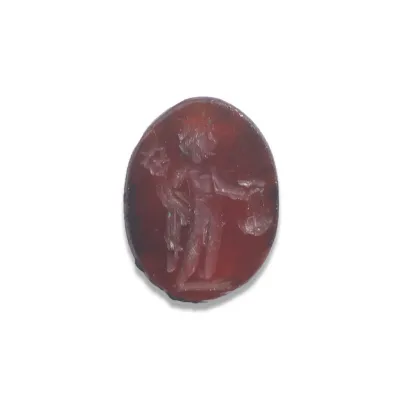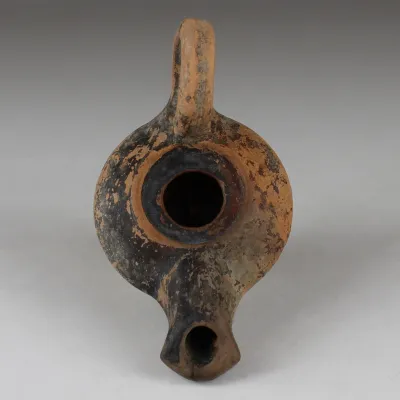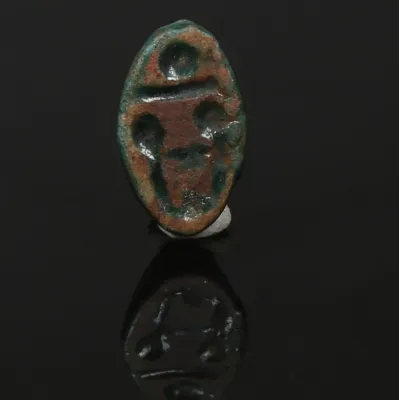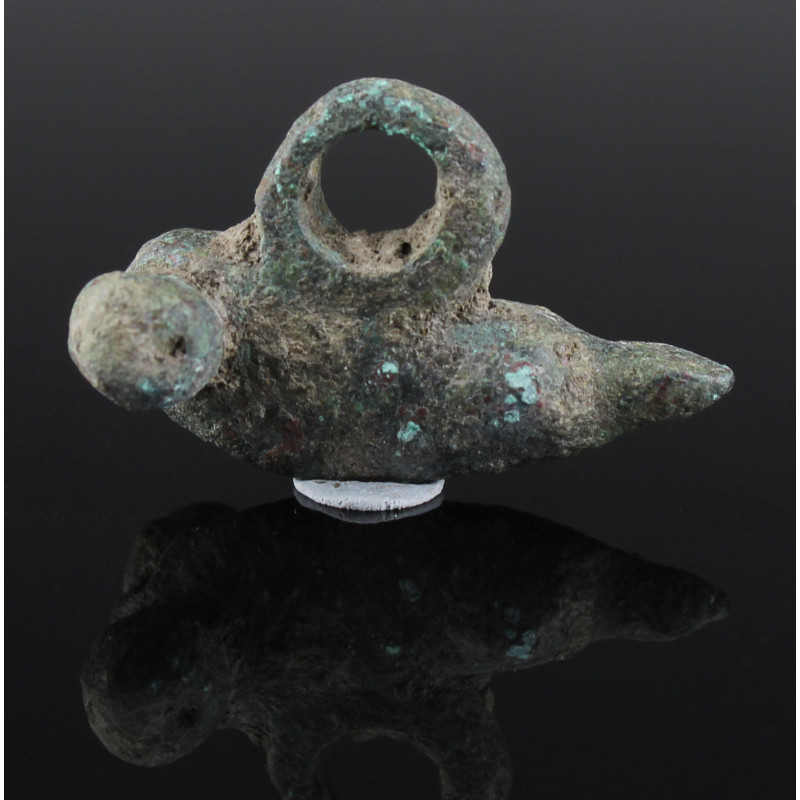
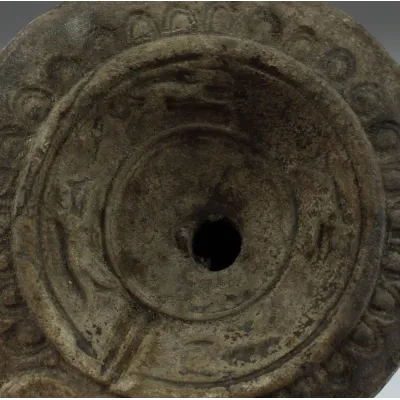
Romain, 1e - 3e siècle ap. J.-C., bronze, 21 mm x 30 mm
Exemplaire observé lors de l’intégration au cabinet Antikarts. L’objet est présenté à partir des informations techniques et de provenance communiquées par la source. La photographie est conservée comme preuve d’état au moment du catalogage.
Objet : Phallic amulet. Matériau : Bronze. Culture : Romain. Période : 1e - 3e siècle ap. J.-C.. Dimensions : 21 mm x 30 mm. État : Good condition.
Repères de contexte : Romain. Datation indiquée : 1e - 3e siècle ap. J.-C..
Notice de référence conservée pour étude, comparaison et documentation.
Provenance : Ex Belgian private collection, acquired between 1970 – 1980 In ancient Roman religion and magic, the fascinus or fascinum was the embodiment of the divine phallus. The word can refer to the deity himself (Fascinus), to phallus effigies and amulets, and to the spells used to invoke his divine protection. Pliny calls it a medicus invidiae, a "doctor" or remedy for envy (invidia, a "looking upon") or the evil eye.. Fiche conservée au Musée Antikarts comme référence documentaire. Source documentaire conservée : https://www.yourantiquarian.com/product/roman-phallic-amulet-5/.
Fiche d'identité archéologique
Notice matérielle, chronologique et culturelle de l'objet