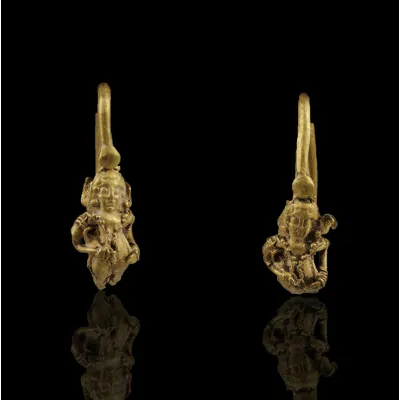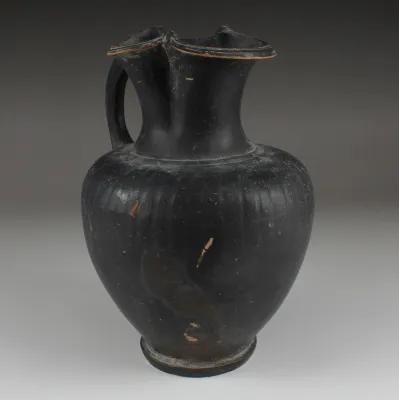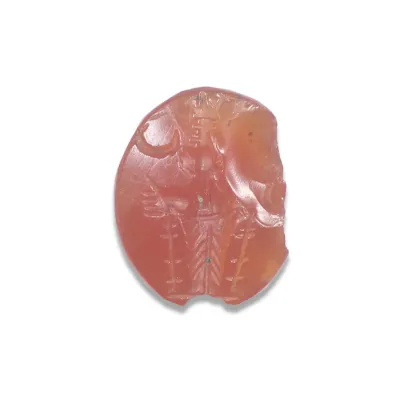
Roman, 1st - 3rd Century A.D, Faience, 20 mm x 11 mm
Specimen observed during Antikarts catalog integration. The record is prepared from the technical and provenance information provided by the source. Photographs are preserved as condition evidence at the time of cataloguing.
Item: Votive 'Manu fica' amulet. Material: Faience. Culture: Roman. Period: 1st - 3rd Century A.D. Dimensions: 20 mm x 11 mm. Condition: Good condition.
Context markers: Roman. Dating indicated: 1st - 3rd Century A.D.
Reference record preserved for study, comparison and documentation.
Provenance: Ex English private collection, London, G.H. Collection, acquired before 1988 The fig sign is a mildly obscene gesture used at least since the Roman Age in Italy and Southern Europe and parts of the Mediterranean region, including in Turkish culture, and has also been adopted by Slavic cultures. The gesture uses a thumb wedged in between two fingers. This gesture is most commonly used to ward off the evil eye, insult someone, or deny a request. In ancient Rome, the fig sign, or manu fica, was made by the pater familias to ward off the evil spirits of the dead as a part of the Lemuria ritual.. Record preserved in the Antikarts Museum as a documentary reference. Stored documentary source: https://www.yourantiquarian.com/product/roman-votive-manu-fica-amulet-3/.
Archaeological Identity Card
Material, chronological and cultural record for the object